
How PVC Pipe Gardens are Turning Kampala’s Boundary Walls into Living Pantries
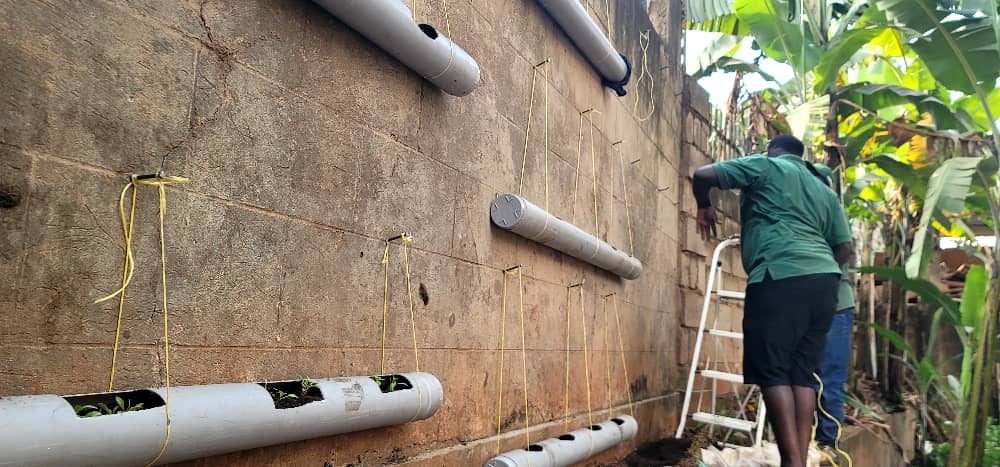
Walk through almost any residential compound in Kampala, Mukono, or Wakiso, and you will see them: tall, bare boundary walls made of concrete block or rough brick, designed for security and privacy. While these walls serve their structural purpose, they also represent hundreds of square meters of unutilized, sun-drenched surface area.
Under the Fresh Yard Initiative, these blank vertical canvases are being transformed into productive, cascading vegetable gardens. By suspended-mount engineering using common PVC drainage pipes, families are turning “dead space” into vibrant sources of fresh nutrition.
1. Upcycling Conduit into Cascading Grow Beds
The mechanics of the suspended PVC wall garden are elegant in their simplicity. Standard 4-inch or 6-inch grey PVC pipes (frequently left over from local construction sites or purchased affordably) are prepared by:
- Cutting horizontal planting pockets at regular intervals to allow seedling growth.
- Fitting secure end-caps to prevent soil and moisture run-out.
- Drilling tiny drainage holes along the base of each pipe tier.
- Suspending the units horizontally using heavy-duty, weather-resistant nylon cords anchored to steel masonry pegs driven directly into the wall.
This layout allows multiple rows of crops to hang stacked above one another. When the top tier is watered, the excess moisture slowly drips down to nourish the pipes below, creating a highly efficient, gravity-assisted irrigation loop.
2. Overcoming Urban Spatial Constraints
Traditional ground-level gardening requires soil access, which is a luxury in many Kampala rental compounds that are heavily paved or cemented. Suspended wall gardens bypass this barrier entirely.
In the installation captured our agronomists are pictured mounting these modular pipe units systematically. Because the pipes sit completely off the ground, they offer several unique agricultural advantages:
- Zero Ground Footprint: Ideal for narrow walkways, small paved backyards, and high-density residential corridors.
- Built-in Pest Defense: Elevating the plants naturally protects delicate greens from ground-dwelling pests, snails, and domestic pets.
- Ergonomic Maintenance: Plants are positioned at chest and eye level, making planting, weeding, monitoring, and harvesting incredibly easy—especially for elderly residents or those with limited mobility.
3. The Quantified Outcome
Installing vertical PVC wall networks across Kampala neighborhoods has unlocked immediate nutritional and economic yields:
- High Density in Small Spaces: A single 3-meter section of wall can easily host 4 suspended PVC pipes, accommodating up to 32 individual crop plugs (such as spinach, coriander, strawberry, or lettuce) in space that previously produced nothing.
- Thermal Regulation: The air gap between the PVC pipe and the masonry wall prevents root overheating, keeping soil temperatures stable even during hot afternoon sun cycles.
- Low Water Demand: The vertical drip-through design reduces overall water requirements by up to 60% compared to standard flat-bed watering.
“We had a narrow, concrete alleyway where nothing could grow. Now, we have four long pipes hanging on the wall filled with healthy celery, parsley, and spring onions. It’s like having a supermarket aisle right outside our kitchen door.”
— Kalyango Dennis, Urban Resident
Transform Your Walls
Do you have a blank brick or concrete wall getting scorched by the sun? Contact the Fresh Yard Initiative technical team today. Our agronomists will visit your home with custom ladders, masonry tools, and organic soil mixes to transform your security boundaries into cascading food walls.