How Upcycled Water Bottles are Raising Kampala’s Greenest Generation
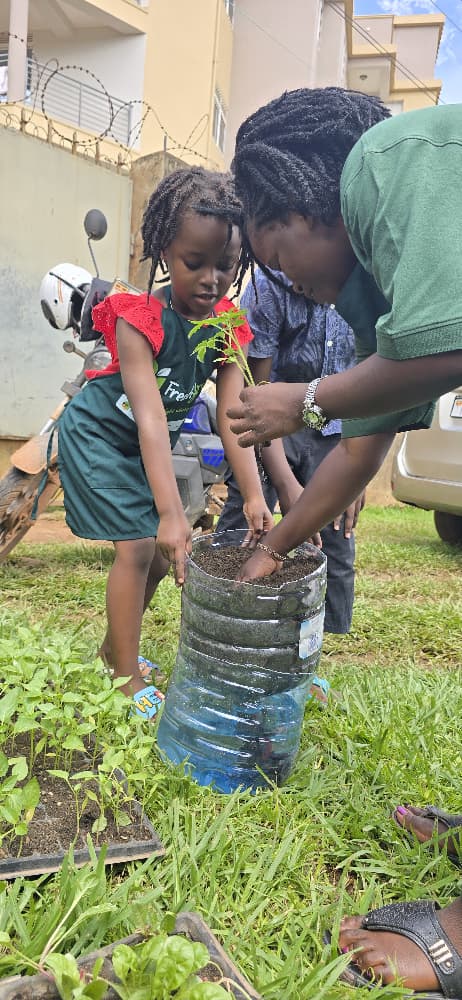
How does a simple 20-liter plastic water dispenser bottle, destined for a municipal landfill, become a catalyst for nutritional empowerment and early childhood learning?
That is the transformative reality unfolding on concrete household plots and compound spaces across Kampala. Under the Fresh Yard Initiative—a collaborative effort powered by S4P Group and Home Harvest—urban families are discovering that space constraints do not define their food security, and that their youngest members can lead the charge.
Single-use and multi-use 20L blue water bottles are abundant across Ugandan offices and households. Once discarded, they clutter drainage systems and compounds. Fresh Yard trainers show families how to slice these robust containers horizontally, pierce drainage channels at the base, pack them with a custom mix of forest soil and kitchen compost, and erect them as vertical planters.
This design allows children and parents to work side-by-side. Because the plastic is transparent or translucent, it holds thermal stability while allowing families to monitor structural moisture directly. This prevents over-watering, one of the primary causes of root rot in backyard container setups.
This direct sensory experience has profound behavioral impacts:
- Overcoming Supermarket Bias: Children who actively participate in placing roots, watering seedlings, and monitoring growth are 3 times more likely to consume the final green vegetables on their plates.
- Interactive Agricultural Education: Rather than studying biological cycles strictly on paper, young children learn real-world climate adaptation, composting, and soil health firsthand in their backyard compounds.
- Zero-Waste Habits: Upcycling domestic containers shifts kids’ paradigms early, showing them that ‘rubbish’ can serve as a valuable resource to produce nourishing food.
The results of this bottle-gardening drive in Kampala neighborhoods speak for themselves:
- Low Footprint, High Yield: A single bottle planter utilizes less than 0.15m² of ground space but can produce up to 6.5kg of organic cherry tomatoes or leafy amaranth annually.
- Widespread Scale: Over 300 recycled dispenser containers have been upcycled across the Kisaasi neighborhood alone, removing non-degradable plastic from compounds while establishing vertical nutrition micro-zones.
- Generational Integration: The project successfully bonds parents, elders, and young children around shared domestic food goals, promoting healthy eating habits from the ground up.
“We started this garden to save money on tomatoes, but the greatest gift is watching my daughter run to the compound every morning to water her bottle planter. She now demands spinach on her plate because she grew it herself.”
— Gloria’s Mother, Kisaasi Resident